


Introduction
Learning to drive is a significant milestone for many people. Whether you are a student preparing for university, a professional seeking greater mobility, or someone who simply wants the freedom that comes with holding a full driving licence, choosing the right training method is essential. In recent years, crash course driving has become one of the most popular ways to learn driving skills quickly and efficiently.
Many learners often confuse crash course driving with intensive driving courses. While the two terms are frequently used interchangeably, there are subtle differences that prospective drivers should understand before making a decision. Both approaches aim to accelerate the learning process, but they may vary in structure, duration, and suitability for different learners.
This guide explores the concept of crash course driving, explains how it differs from intensive driving courses, highlights its benefits, and discusses why it has become an increasingly important option for modern learners.
Understanding Crash Course Driving
What Is Crash Course Driving?
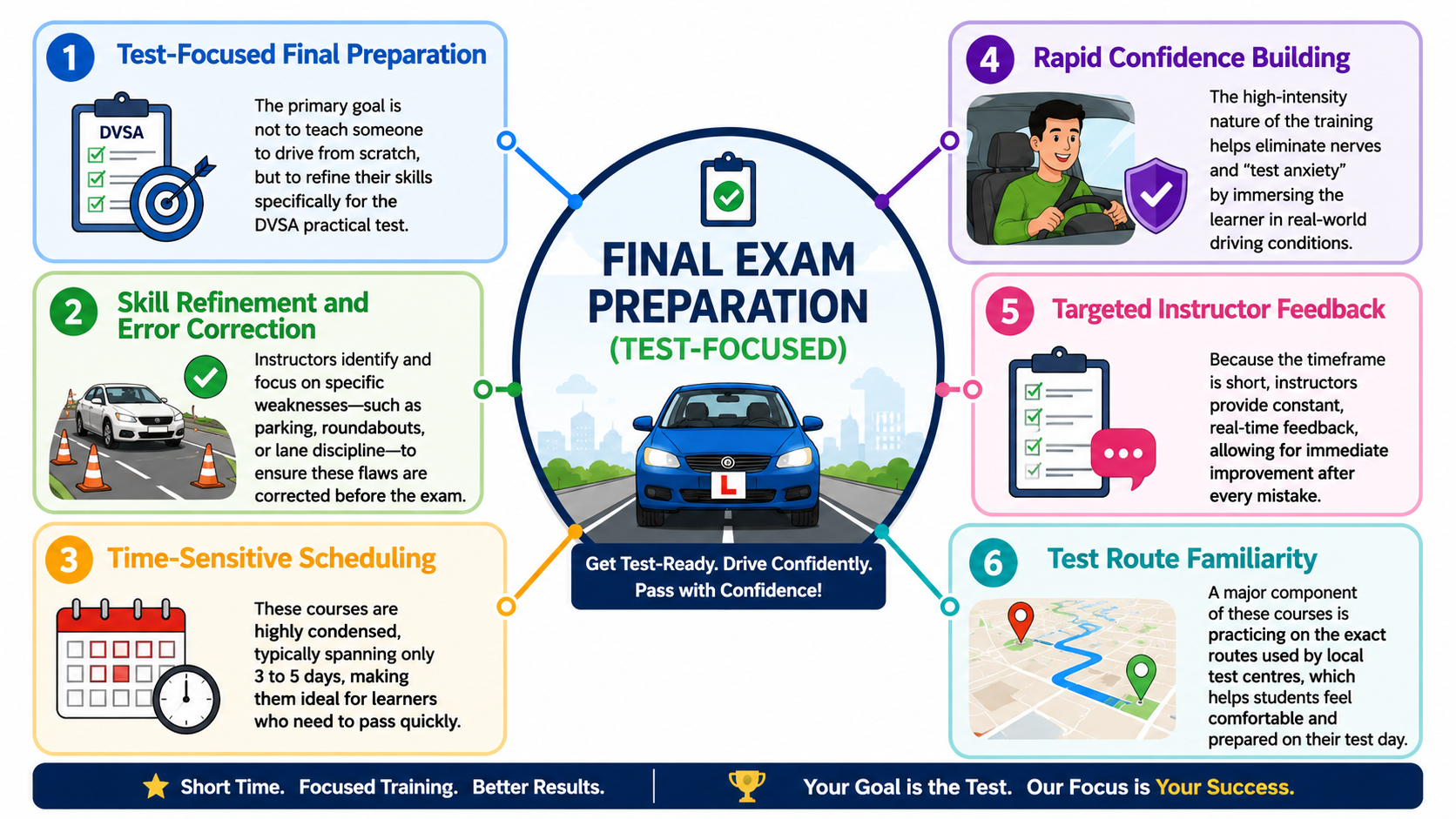
Crash course driving refers to a condensed driving programme designed to help learners acquire essential driving skills within a short period. Instead of spreading lessons across several months, learners complete multiple hours of training over a few days or weeks.
The primary objective is to prepare learners for their practical driving test as quickly as possible while ensuring they develop safe driving habits and a strong understanding of road rules.
Who Typically Chooses Crash Course Driving?
Crash course driving appeals to a wide range of learners, including:
- University students during holidays
- Professionals with limited spare time
- Individuals relocating for work
- Learners who have previously failed a driving test
- People seeking a quick route to obtaining a driving licence
Because lessons are concentrated into a shorter timeframe, learners often retain information more effectively and maintain momentum throughout the training process.
What Is an Intensive Driving Course?

Definition of Intensive Driving Courses
An intensive driving course is a structured training programme that compresses traditional driving lessons into a shorter period. These courses can range from a few days to several weeks depending on the learner’s experience level.
Unlike some crash courses that focus primarily on rapid preparation for the driving test, intensive courses often follow a more detailed curriculum with carefully planned progression.
How Intensive Courses Work
Most intensive driving courses begin with an assessment lesson. Instructors evaluate the learner’s existing abilities and create a customised training plan.
The course may include:
- Basic vehicle controls
- Junctions and roundabouts
- Dual carriageways
- Independent driving
- Manoeuvres
- Hazard perception awareness
- Mock driving tests
The goal is not merely to pass the driving test but to develop long-term driving competence.
Crash Course Driving vs Intensive Driving Course
Key Differences at a Glance
| Feature | Crash Course Driving | Intensive Driving Course |
|---|---|---|
| Focus | Fast test preparation | Comprehensive skill development |
| Duration | Usually a few days | Several days to weeks |
| Flexibility | Often highly condensed | More structured timetable |
| Suitable For | Learners needing rapid results | Learners wanting detailed instruction |
| Lesson Style | Fast-paced | Progressive learning |
Why the Terms Are Often Confused
In practice, many driving schools use the terms interchangeably. Both methods involve concentrated learning periods and faster progression than traditional weekly lessons.
However, the main distinction lies in the learning approach. Crash course driving tends to prioritise speed, whereas intensive courses often place greater emphasis on thorough skill development.
Why Crash Course Driving Has Become So Popular
Busy Modern Lifestyles
Today’s learners often struggle to fit weekly lessons into their schedules. Work commitments, education, and family responsibilities can make traditional driving lessons difficult to manage.
Crash course driving offers a practical solution by allowing learners to dedicate a short period exclusively to driving tuition.
Faster Licence Acquisition
One of the most attractive benefits is the opportunity to obtain a driving licence more quickly. Instead of waiting months between lessons, learners can complete their training in a concentrated timeframe.
Improved Learning Retention
When lessons are closely grouped together, learners are less likely to forget important techniques between sessions. This consistency can contribute to stronger skill retention and greater confidence.
Benefits of Crash Course Driving
1. Accelerated Learning Process
The concentrated nature of crash courses allows learners to build skills rapidly. Daily practice reinforces learning and helps learners progress more efficiently.
2. Greater Confidence Behind the Wheel
Frequent exposure to real driving situations helps learners become comfortable with various road conditions, reducing anxiety and increasing confidence.
3. Reduced Lesson Gaps
Traditional lessons often involve week-long gaps between sessions. During these breaks, learners may forget previously learned skills. Crash course driving minimises this issue.
4. Strong Focus and Momentum
Because learners immerse themselves in driving training, they maintain focus and avoid the stop-start pattern often associated with conventional lessons.
5. Potential Cost Savings
Although the upfront cost may appear higher, many learners require fewer overall lessons when following an intensive programme, potentially reducing total training expenses.
Who Is Best Suited for Crash Course Driving?
Complete Beginners
Beginners can benefit from structured crash courses if they are comfortable with intensive learning environments.
Learners With Previous Experience
Those who have already taken driving lessons often achieve excellent results because they can refresh existing knowledge and focus on refining weaker areas.
Individuals Facing Time Constraints
People starting a new job, moving home, or preparing for university may find crash course driving particularly valuable due to its efficiency.
Situations Where Intensive Courses May Be Better
Nervous Learners
Some individuals prefer a slower pace that allows more time for reflection and practice between lessons.
People With Busy Daily Commitments
Although crash courses save time overall, they require several consecutive days of availability. Intensive courses with slightly longer durations may provide greater flexibility.
Learners Needing Extra Practice
Certain learners benefit from gradual skill development and may find extended intensive programmes more suitable than highly condensed crash courses.
Essential Skills Covered During Crash Course Driving
Vehicle Control
Learners master steering, clutch control, braking, gear changes, and vehicle positioning.
Road Awareness
Understanding traffic signs, road markings, speed limits, and road layouts is crucial for safe driving.
Hazard Recognition
Developing the ability to identify and respond to potential hazards forms a core component of crash course driving.
Parking and Manoeuvres
Training includes:
- Parallel parking
- Bay parking
- Pulling up on the right
- Reversing techniques
Independent Driving
Modern driving tests assess a learner’s ability to drive independently using road signs and sat-nav directions.
How to Choose the Right Crash Course Driving Provider
Check Instructor Qualifications
Ensure instructors are properly qualified and registered.
Read Reviews
Online reviews provide valuable insights into pass rates, teaching quality, and customer experiences.
Understand the Course Structure
Ask questions about:
- Total lesson hours
- Test booking assistance
- Vehicle availability
- Instructor support
Compare Prices Carefully
The cheapest option is not always the best value. Consider the quality of tuition and support offered.
Common Misconceptions About Crash Course Driving
“It Is Only for Advanced Learners”
This is false. Many crash courses cater specifically to beginners.
“You Cannot Learn Properly in a Short Time”
While not suitable for everyone, many learners thrive in intensive learning environments and achieve excellent results.
“It Guarantees a Pass”
No driving course can guarantee success. Passing depends on preparation, attitude, and performance during the test.
The Role of Practice Outside Lessons
Private Practice Opportunities
Supplementing professional instruction with private practice can significantly improve progress.
Building Real-World Experience
Driving in various weather conditions, traffic situations, and road environments helps develop well-rounded skills.
The Future of Crash Course Driving
As lifestyles become increasingly busy, demand for flexible learning solutions continues to grow. Driving schools are adapting by offering tailored crash course driving programmes that combine intensive tuition with modern learning techniques.
Technology, online theory training, and personalised instruction are likely to make crash courses even more effective in the coming years.
For additional guidance on learning to drive in the manchester, learners can visit the official DVSA information available through the UK Government website.
Frequently Asked Questions
1. What is crash course driving?
Crash course driving is an accelerated learning programme that condenses driving lessons into a short timeframe, helping learners prepare for their driving test more quickly.
2. Is crash course driving the same as an intensive driving course?
Not exactly. While both involve concentrated learning, crash course driving often focuses on rapid test preparation, whereas intensive courses may provide more comprehensive skill development.
3. How long does a crash course driving programme usually last?
Most programmes range from a few days to two weeks, depending on the learner’s experience and training requirements.
4. Can complete beginners take a crash course driving programme?
Yes. Many providers offer crash courses specifically designed for beginners with little or no previous driving experience.
5. Is crash course driving more expensive than weekly lessons?
The upfront cost is usually higher, but the overall expense may be comparable or even lower if fewer lessons are required.
6. What are the main advantages of crash course driving?
Key benefits include faster learning, improved retention, greater confidence, reduced lesson gaps, and quicker access to a driving licence.
7. Who should avoid crash course driving?
Learners who experience significant driving anxiety or prefer gradual learning may benefit more from a traditional or extended intensive course.
8. Does crash course driving guarantee a driving test pass?
No. Success depends on the learner’s ability, preparation, attitude, and performance during the practical driving test.
Conclusion
Crash course driving has transformed the way many people learn to drive in the Manchester. By condensing lessons into a shorter period, it provides an efficient and practical route towards obtaining a driving licence. While it shares similarities with intensive driving courses, important differences exist regarding pace, structure, and learning objectives.
For learners seeking a faster path to driving independence, crash course driving can offer significant advantages, including improved knowledge retention, increased confidence, and quicker test readiness. However, choosing the right course ultimately depends on individual learning preferences, availability, and experience level.
Whether you select a crash course or a more structured intensive programme, the most important factor remains the same: developing safe, responsible driving habits that will serve you throughout your driving journey. Visit Drive Smart Driving School Office.